

Hotel Management Institute in Dwarka: A Complete Guide for Students After 12th
Choosing the right hotel management institute in Dwarka is an important decision for students who want to build a career in the hospitality industry. With hotels, restaurants, resorts, cruise companies, catering businesses and other hospitality organisations offering diverse career opportunities, professional training can help students develop the practical knowledge, confidence and workplace skills required to enter the industry.
For students and parents in Dwarka, the decision should not be based only on how close an institute is to home. Practical training, faculty, industry exposure, workshops, internships, training infrastructure, course structure and career guidance are equally important factors to consider.
This guide explains what students should look for while choosing a hotel management institute in Dwarka, what they can learn during their training, which career pathways are available and why students from Dwarka can also consider hospitality institutes in the nearby IGI Airport, Aerocity and South-West Delhi areas.
Why Are Students in Dwarka Choosing Hotel Management?
Dwarka is one of Delhi’s major residential and educational hubs, with students travelling to different parts of Delhi and the National Capital Region for higher education and professional courses.
For students interested in hospitality, the location is particularly relevant because of the presence of hotels, restaurants, airports, business districts and hospitality establishments across South-West Delhi and the wider Delhi-NCR region.
A student looking for a hotel management course in Dwarka may therefore consider institutes located within Dwarka as well as easily accessible hospitality institutes in nearby areas.
However, location should only be one part of the decision.
A good hotel management education should combine classroom learning with practical training, industry exposure and professional development.
What Should You Look for in a Hotel Management Institute in Dwarka?
Before taking admission, students and parents should compare institutes on several practical factors rather than selecting an institute only because it appears close to home.
1. Practical Training
Hotel management is an operational field. Students should get opportunities to practise the concepts they learn in classrooms.
Look for training facilities and practical sessions covering areas such as:
Food Production
Bakery and Confectionery
Food & Beverage Service
Front Office Operations
Housekeeping
Guest Interaction
Professional Grooming
Hospitality Operations
Practical exposure helps students become familiar with professional procedures, equipment, hygiene standards, teamwork and workplace discipline.
2. Industry Exposure
Hospitality is an industry-driven profession. Interaction with working professionals, chefs, hotel managers and other hospitality experts can help students understand how hotels and other hospitality businesses operate.
Students should therefore check whether an institute conducts:
Industry workshops
Chef masterclasses
Hotel visits
Guest lectures
Demonstrations
Hospitality events
Industrial training
Internship opportunities
3. Faculty and Trainers
The quality of training depends significantly on the people delivering it.
While comparing a hotel management institute in Dwarka or nearby areas, students should understand the faculty’s academic and industry experience and how much practical guidance students receive during training.
4. Course Structure
Students should carefully understand what each course includes before taking admission.
A good course structure should provide an appropriate balance between theoretical knowledge, practical training, professional development and industry exposure.
5. Career Preparation
Students should also ask how an institute prepares them for professional life.
Career preparation may include:
Communication skills
Grooming
Interview preparation
Resume development
Industry interaction
Internship guidance
Career counselling
Placement assistance
Why Practical Learning Matters in Hotel Management
One of the biggest differences between hospitality education and many conventional academic programmes is the importance of practical learning.
Students can read about food preparation, restaurant service, hotel reception or housekeeping procedures in a textbook. However, professional confidence develops when these concepts are practised repeatedly.
For example, a student learning food production should understand not only recipes but also:
Ingredient handling
Kitchen hygiene
Food safety
Mise en place
Cooking methods
Equipment handling
Portion control
Presentation
Team coordination
Professional kitchen discipline
Similarly, students studying front office operations need opportunities to understand guest communication, reservations, professional etiquette and hotel terminology.
This is why practical exposure should be one of the first things students evaluate when comparing hotel management institutes in Dwarka and nearby areas.
What Do Students Learn During Hotel Management Training?
Hotel management is much broader than simply learning how to work in a hotel.
A comprehensive hospitality programme can introduce students to several operational areas.
Food Production
Food Production introduces students to the fundamentals of professional kitchen operations.
Students can learn about:
Basic cooking techniques
Food preparation
Kitchen organisation
Hygiene and sanitation
Ingredient handling
Equipment usage
Menu understanding
Food presentation
Professional kitchen practices
For students interested in becoming chefs or pursuing culinary careers, food production can become an important part of their hospitality education.
Bakery and Confectionery
Bakery training introduces students to the fundamentals of baking and product preparation.
Practical activities may include products such as:
Tea cakes
Muffins
Fruit cakes
Cookies
Breads
Pastries
Other baked products
Students also learn about preparation techniques, consistency, baking procedures, finishing and presentation.
Food & Beverage Service
Food and Beverage Service prepares students to understand professional restaurant and service operations.
Students can learn:
Table setting
Restaurant service
Guest interaction
Service procedures
Professional etiquette
Menu knowledge
Food and beverage terminology
Team coordination
Front Office Operations
The front office is often the first point of contact between a hotel and its guests.
Training can cover:
Guest communication
Reservations
Check-in and check-out concepts
Hotel terminology
Front desk procedures
Telephone etiquette
Professional grooming
Guest service
Housekeeping Operations
Housekeeping plays a vital role in maintaining cleanliness, comfort and guest satisfaction.
Students can be introduced to:
Room servicing
Cleaning procedures
Hotel housekeeping standards
Public-area maintenance
Guest comfort
Housekeeping organisation
Together, these areas help students develop an understanding of how different hotel departments work together.
Why Industry Exposure Can Make a Difference
Classroom learning provides the foundation, while industry exposure helps students understand how hospitality works in real professional environments.
Workshops, masterclasses, hotel visits and interaction with hospitality professionals can expose students to practical situations that may not be fully understood through textbooks alone.
For example, a professional chef workshop can allow students to observe professional techniques and ask questions directly. Similarly, a hotel visit can help students understand how departments such as front office, food production, food and beverage service and housekeeping function within an operating property.
Students searching for a hotel management institute near Dwarka should therefore ask about the institute’s actual industry exposure rather than relying only on promotional statements.
What Is the Difference Between a Hotel Management Institute and a Regular College Course?
Students often compare hotel management education with conventional college programmes.
The biggest difference is the practical and operational nature of hospitality.
Hotel management students may spend significant time developing skills related to:
Food preparation
Restaurant service
Guest handling
Hotel operations
Professional grooming
Communication
Teamwork
Workplace discipline
This makes the learning experience particularly relevant for students who prefer a combination of classroom education and hands-on training.
When comparing a hotel management institute in Dwarka, students should therefore look at the amount and quality of practical learning included in the programme.
Hotel Management Courses Students Can Explore After Class 12
Students from Dwarka and nearby areas can choose from different hospitality education pathways depending on their interests and career plans.
The right programme depends on whether a student wants foundational hospitality knowledge, specialised food production training, broader hotel operations education or a pathway toward higher qualifications.
At The Hotel School, students can explore programmes such as:
Foundation Course in Hospitality Operations
The Foundation Course in Hospitality Operations provides students with foundational exposure to hospitality and hotel operations.
Total Course Fee: ₹1,20,000
Certified Food Production Course
The Certified Food Production Course is designed for students who want to develop focused skills in food production and culinary operations.
Total Course Fee: ₹1,30,000
Advanced Diploma in Hospitality Operations
The Advanced Diploma in Hospitality Operations provides broader exposure to hotel and hospitality operations.
Total Course Fee: ₹2,40,000
HMO + Degree Progression
Students looking for a longer-term academic pathway can explore the HMO + Degree progression route.
Total Fee: ₹2,98,500
Students should always review the latest course structure, eligibility, fee details and admission conditions directly with the institute before applying.
How to Choose the Right Course After 12th
There is no single hotel management programme that is right for every student.
A student interested mainly in culinary and kitchen operations may prefer a food-production-focused programme.
A student interested in broader hotel operations may prefer an advanced hospitality programme covering multiple departments.
Students looking for a longer academic pathway can consider a programme that provides progression toward a degree qualification.
Before making a decision, students should consider:
Their career interests
Preferred learning style
Course duration
Practical training
Academic progression
Career goals
Total course cost
Internship opportunities
Industry exposure
Hotel Management Institute Near Dwarka: Why Location Should Not Be the Only Factor
Students searching for a hotel management institute in Dwarka will naturally consider institutes within the locality.
However, students should also expand their search to nearby South-West Delhi areas if an institute offers stronger practical training and industry exposure.
The actual travel time, transport connectivity and quality of education are more useful measures than simply checking whether the institute’s address contains the word “Dwarka.”
For example, students from Dwarka may consider hospitality institutes around the IGI Airport, Aerocity and Kapashera areas depending on their daily travel requirements.
This wider approach can give students more options when comparing hospitality education providers.
Why Students from Dwarka Can Consider The Hotel School
The Hotel School is located in Kapashera, New Delhi, close to the IGI Airport and Aerocity hospitality zone.
Therefore, while The Hotel School is not physically located inside Dwarka, it can be considered by students searching for a hotel management institute near Dwarka and looking for a hospitality-focused institute in the wider South-West Delhi area.
The institute focuses on practical hospitality education and provides students with opportunities to develop skills across different areas of hotel operations.
Students can experience learning through:
Practical hospitality training
Food production sessions
Bakery workshops
Culinary activities
Food and beverage training
Hotel operations training
Industry workshops
Hospitality masterclasses
Hotel visits
Professional development activities
Internship and industrial training opportunities
The Hotel School also provides students with opportunities to interact with the hospitality industry through workshops, hotel visits and professional exposure.
For students and parents, visiting the campus before admission can be a useful way to understand the training environment, facilities and learning approach.
From Classroom Learning to Hospitality Careers
Hotel management education can lead to career opportunities across several sectors.
Hotel Operations
Students can explore roles in:
Front Office
Food & Beverage Service
Housekeeping
Guest Relations
Hotel Operations
Culinary Careers
Students interested in food can explore opportunities in:
Food Production
Professional Kitchens
Bakery
Restaurants
Catering
Food Service
Other Hospitality Sectors
Hospitality skills can also be relevant to:
Restaurants
Quick Service Restaurants
Catering companies
Events
Tourism
Cruise hospitality
Guest services
Travel-related businesses
The career path a student follows depends on their skills, qualifications, experience, performance and professional interests.
Why Internships and Industrial Training Matter
An internship or industrial training experience can help students understand the difference between classroom learning and professional work.
During industry exposure, students may experience:
Professional working environments
Departmental responsibilities
Guest expectations
Workplace communication
Team coordination
Operational discipline
Professional grooming
Time management
Students should therefore ask any hotel management institute in Dwarka or nearby area about the type of internship and industrial training opportunities available to students.
10 Questions to Ask Before Joining a Hotel Management Institute
Before paying admission fees, students and parents should ask:
1. How much practical training is included in the course?
2. Which hotel departments are covered?
3. What training facilities are available?
4. Are industry professionals invited for workshops?
5. Are students taken for hotel visits?
6. What internship or industrial training opportunities are available?
7. What career guidance is provided?
8. What qualifications can students progress toward?
9. What is included in the total course fee?
10. Can students and parents visit the campus before admission?
The answers to these questions can help students make a more informed decision rather than choosing an institute based only on advertisements or online rankings.
Is Hotel Management a Good Career Option After 12th?
Hotel management can be a suitable career choice for students who enjoy practical learning, teamwork, communication and working in service-oriented environments.
Students who are interested in food, travel, hotels, restaurants, guest interaction or international hospitality may find the industry particularly interesting.
At the same time, students should understand the realities of hospitality careers.
The industry can involve:
Shift-based work
Weekend and holiday duties
Standing and operational work
High standards of grooming
Customer interaction
Team-based responsibilities
Professional discipline
Students who understand these expectations before joining are often better prepared for the professional environment.
Hotel Management Career Pathways
A student’s career can develop in different directions depending on their interests and experience.
For example:
Hospitality Training → Internship → Entry-Level Hospitality Role → Departmental Experience → Supervisory Responsibilities → Management Opportunities
A student interested in culinary operations may follow a different route:
Food Production Training → Kitchen Internship → Commis-Level Role → Culinary Experience → Higher Kitchen Responsibilities
Similarly, students interested in guest services may build their careers through front office and guest relations roles.
The hospitality industry offers multiple pathways, allowing students to develop their careers according to their strengths and interests.
What Makes a Good Hospitality Learning Environment?
A good hospitality institute should provide more than classrooms.
Students benefit from an environment where they can:
Practise regularly
Work in teams
Interact with trainers
Participate in workshops
Develop communication skills
Learn professional grooming
Experience hospitality operations
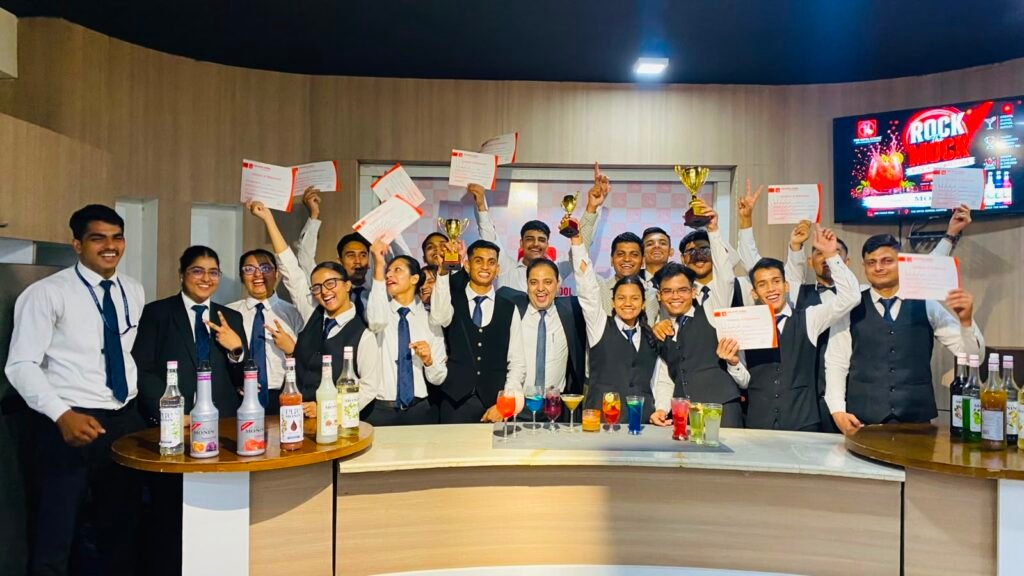
Participate in competitions and activities
Interact with industry professionals
These experiences can help students gradually develop the confidence required to enter the hospitality industry.
Final Thoughts
Finding the right hotel management institute in Dwarka involves more than comparing addresses or course names. Students should look at the quality of practical training, industry exposure, faculty, workshops, internships, career preparation and long-term course progression.
For students living in Dwarka and nearby South-West Delhi areas, it is also worth considering accessible hospitality institutes around the IGI Airport, Aerocity and Kapashera region.
The Hotel School offers hospitality-focused programmes with practical training, industry exposure and multiple pathways for students interested in hotel operations, food production, culinary careers and the wider hospitality industry.
If you are planning to pursue hotel management after Class 12, visit the campus, understand the course structure and compare your options carefully before taking admission.
Explore The Hotel School’s hospitality programmes and take the next step toward building your career in the hospitality industry.